
Law 555: The Trapiche Route Nobody Tells You
 written by one who's been there
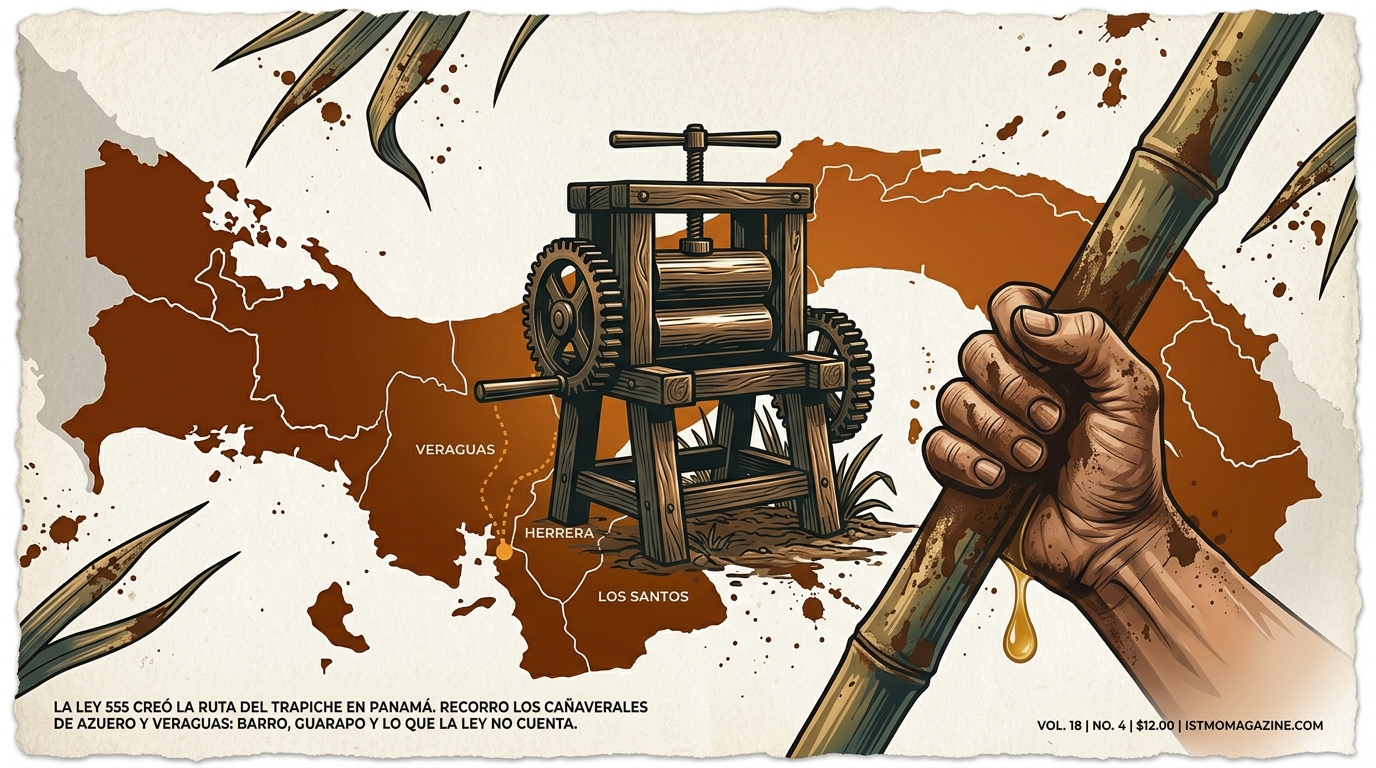
The law that pulled me down from the sky
I landed in a clearing near Ocú. The sun hit like a frying pan. A guy with a machete and a national team jersey looked at me and said, "Are you here for Law 555?" I had no idea what he was talking about. But that's where it all started. Law 555 of September 29, 2026 created the trapiche route. And I, who have been flying over Panama for years, came down to walk it. Because from above you see the river's scar, the sugarcane fields like green carpets, but you can't smell the mud from the air.
The law is simple: it declared the sugarcane trapiches of Azuero and Veraguas cultural heritage. But it's not a desk decree. It forces municipalities to put up signs, fix roads, give microcredits to trapiche owners. And above all, promote the route as a destination. That sounds nice on paper. On the ground, it's another story.
The trail that nobody marks on Maps
I left Ocú at 6:10 in the morning. A beat-up 4x4, with a driver named Nel who spat out the window. The trapiche route is not on Google Maps. Nel told me, "Hold on, this gets ugly." And it got ugly. Two hours of hills, loose rocks, dust that got into my backpack and my teeth. The sticky heat hugs you and won't let go.
We arrived at a trapiche in La Colorada. A zinc shed, a diesel motor that sounded like a plane taking off. Mrs. Mercedes, with a flowery apron, had been milling cane since 5. She gave me a glass of guarapo. Cold, sweet, with a hint of lime. That stays with you. I asked if Law 555 had changed anything for her. She laughed. "They say tourists will come. But I haven't seen one."
What Law 555 promises and what you find
Law 555 of September 29, 2026 has 32 articles. I read them in a hammock, with chitres biting my legs. It promises signage, training, interpretive routes. But on the real road, things are cruder. The signs that exist are rusty. The road to Los Santos has unpaved stretches. And the trapiches open whenever they feel like it. No fixed schedule.
Still, the trapiche route is worth it. Not for what the law says, but for what happens inside. I saw an 8-year-old boy push cane into the mill. His grandfather, Don Chico, told me, "This isn't tourism, it's our life." And he gave me a piece of hot melcocha. Sticky, smoky, tasting of the countryside.
How much it really costs to reach a real trapiche
It's not cheap, but it's not a fortune either. Here's what I spent in two days:
- Transport: $25 round trip in 4x4 from Ocú. If you take a bus, $3-5 to the turnoff, but then you walk or pay $10 more for a jeep.
- Food: $4-7 per meal at fondas. A plate of rice with chicken, patacones, and cabbage salad. Nothing gourmet.
- Guarapo and melcocha: $1-2. Sometimes they give it to you if they like you.
- Lodging: $15-20 in a community guesthouse. Hammock or hard bed. Ask for Doña Elvira in La Colorada.
- Local guide: $20-30 per day. Not mandatory, but without a guide you get lost.
I didn't confirm if Law 555 covers any subsidy for guides. Ask the community board. They know more than any official.
The trapiche that's not in the brochure
There's a trapiche in the community of El Cacao, near Tonosí. It doesn't appear in any Law 555 brochure. I got there by accident, because Nel took a wrong turn. The owner, a man named Ezequiel, greeted me with a sour face. "Tourist? Nobody comes here." I explained I was flying low, getting to know things. He let me in.
Inside, the smell of burnt cane and diesel hits you. Three men worked the mill. The juice fell into an iron pot. Ezequiel gave me a wooden spoon to taste the honey boiling. It burned. But it tasted like glory. He told me Law 555 promised him a loan to fix the roof. It never came. "But I'm still here. This is my father's legacy."
What I'd do differently the second time
The first time you arrive with expectations. The second, with boots. Because the mud reaches your ankle. And the sun doesn't forgive. Here's what I'd bring again:
- Rubber boots: not sneakers. Mud sticks like gum.
- Two extra shirts: the heat soaks you in an hour.
- Cash in small bills: trapiches don't have Yappy or card readers.
- A hammock: if you stay overnight, some guesthouses only have that.
- Patience: schedules are a suggestion. Law 555 didn't change that.
I'd also bring a notebook. Because the trapiche route isn't for selfies. It's for sitting down, listening to the motor, watching cane turn into honey. And putting up with a chitre biting your arm while Doña Mercedes tells you her grandfather started this in 1950.
Law 555 isn't the destination, it's the push
In the end, Law 555 of September 29, 2026 is a paper with good intentions. But the trapiche route existed before. It exists in Ezequiel's calloused hands, in Mercedes's guarapo, in Nel's sweat at the wheel. The law just puts a name on it. You put on the boots.
If you go, don't expect perfect signage. Don't expect WiFi. Don't expect a welcome sign. Expect mud, heat, flies, and a glass of guarapo that brings your soul back. And if you get lost, ask for Don Chico's trapiche. Anyone will tell you. But don't tell them you're coming for the law. Tell them you're coming for the honey.
See you at the next milling. I'll bring my hammock. You bring cash.
