Currency
The balboa (B/.) equals the US dollar and both work as cash: dollars in bills, balboas in coins. Carry cash for towns and markets; cards work well in the city and tourist areas.
 Talk to Arpy
A small country between two oceans, living jungle and warm people. Everything essential so your first trip flows.
Panama is a bridge between worlds: the Caribbean and the Pacific, the urban and the wild, the ancestral and the modern. Its people mix indigenous, Afro-Caribbean, Spanish and continental migrant heritage. Spanish is the official language, but in the comarcas indigenous languages such as Guna, Ngäbere and Emberá are spoken, and in Bocas del Toro you will hear Creole English.
Music, food and festivals change by region: Congo drums in Colón, polleras and tamborito in the central provinces (with the famous Las Tablas carnival), reggae in Bocas and the warmth of the old town in the capital. Travel with respect for communities and indigenous territories: many areas ask for permission or have visiting rules.
What to know before landing so your trip goes smoothly.
The balboa (B/.) equals the US dollar and both work as cash: dollars in bills, balboas in coins. Carry cash for towns and markets; cards work well in the city and tourist areas.
Spanish is the official language. English is understood in tourist areas, the Canal and Bocas del Toro, and indigenous languages are spoken in the comarcas. Learning a few Spanish phrases opens many doors.
Panama is generally a safe destination, but as in any big city, watch your phone and valuables, especially in crowded areas. Emergencies: dial 911. Keep copies of your documents and use official transport.
The city has a Metro, Metrobus and taxis (including apps). Long-distance buses connect the provinces, and domestic flights reach Bocas, Chiriquí and Darién. Renting a car gives you freedom, but check road conditions in the rainy season.
You can buy a local SIM (Digicel, Tigo, +móvil) with your passport, or activate an eSIM on your phone before you travel. Internet is good in the city and decent in towns; do not expect signal in the jungle, the sea or remote islands.
Not mandatory. In restaurants, 10% is a courtesy when service is good (some include it as 'service'). On tours and with guides, a tip of 5–10 USD per day is welcome.
Panama is tropical: heat and humidity all year. Dry season runs December–April (ideal for beaches and San Blas); rainy season May–November (everything gets greener and there are fewer tourists). Highlands like Boquete can be cool at night.
Many passports (US, Canada, EU, UK and most of Latin America) enter visa-free for tourism up to 180 days; entry is decided at migration and you must show onward travel and funds. Long stays or work require a visa. Always check with your consulate before traveling.
Useful numbers and references during your stay.
911 handles police, fire and ambulances nationwide. Also keep your hotel or accommodation number handy.
911The Tourist Police patrols tourist and beach areas. You can ask for guidance at any tourist module or station.
Tourist PoliceCheck your country's embassy or consulate in Panama before traveling and keep their phone and address handy. Many have an emergency line for citizens abroad.
Your consulate / embassyThe Panama Tourism Authority (ATP) offers information at tourist spots. You can also ask at your hotel or in the RUTA PTY community.
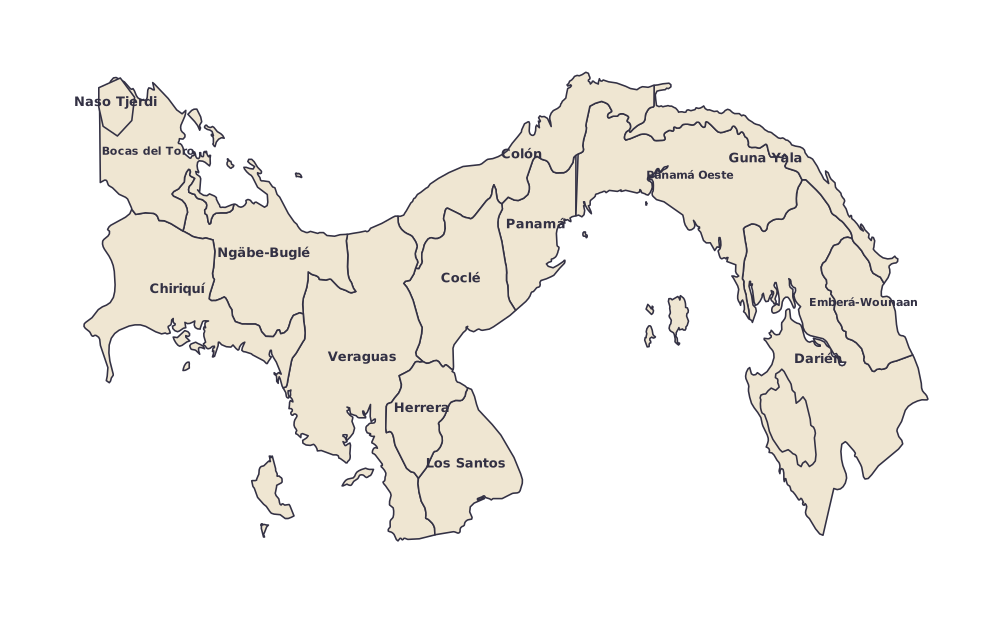
Tourism Authority (ATP)Tap each region on the map to see what to do, how much time to give it and what to eat. These are the 10 destinations Panama offers from coast to coast.
Tap a region on the map to see its card
