
Why Americans Choose Panama for Retirement
 written by one who's been there
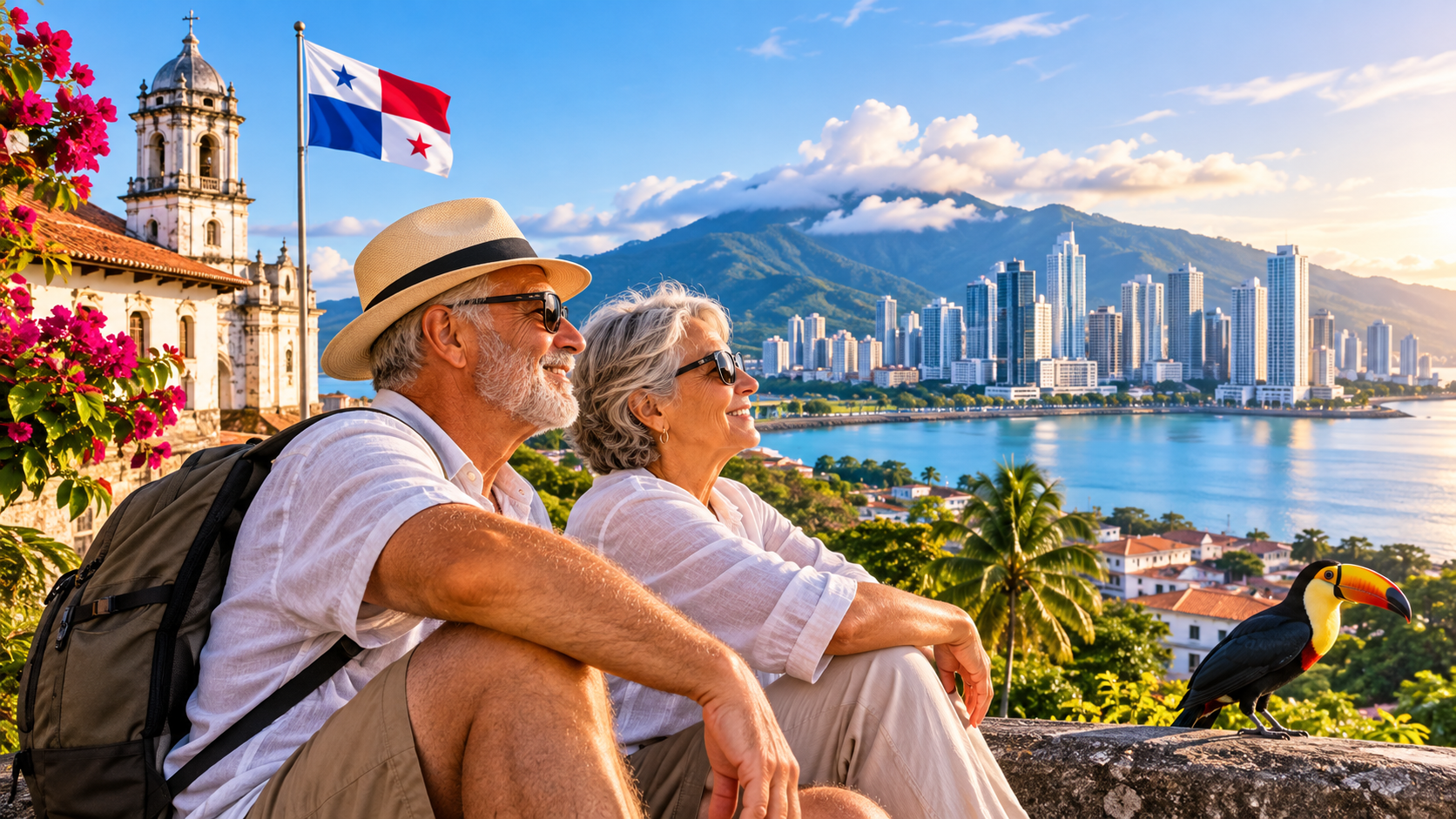
I landed at Tocumen on a Tuesday at 2 p.m. The heat hits you in the face like a wet towel. Outside, a line of taxi drivers with sweat-soaked shirts. Among them, a gringo about 70, khaki shorts, Yankees cap, waits his turn with a grin from ear to ear. He tells me: "Buddy, I've been coming for six years and this year I'm finally moving." I ask him why Panama. He laughs. "Because here I can live on my pension without missing anything." That phrase stuck with me. And as a good eagle who flies over this isthmus, I decided to land, walk, and find out firsthand why Americans choose Panama for retirement.
The best country for retirement: what the numbers say (and what they don't)
I'm no economist, but I can read a power bill. In Boquete, a mountain town in Chiriquí, I met Tom, a former teacher from Ohio. He lives in a little house with a view of Volcán Barú. He pays $450 in rent. "In Florida I paid triple for an apartment with cockroaches," he says, laughing, and offers me coffee from the region. The coffee is strong, almost like a punch to the back of the head. Tom has a teacher's pension that wouldn't get him far in the U.S. Here he lives well. Eats well. And even treats himself to a woman who cleans once a week.
The famous pensionado program in Panama has existed for decades. It's not a fairy tale. It gives you discounts on health, flights, movies, restaurants. A few bucks off a medical consultation. It won't make you rich, but it helps. And for a retiree looking to stretch their dollars, that counts. The pensionado visa is a magnet. But beware: it's not automatic. There are forms, paperwork, lawyers. Nothing is free in life, not even retiring in Panama.
The trail nobody marks on Maps: real life in Boquete
From above, Boquete looks like a wrinkled green handkerchief. Coming down, the air turns cool, humid. It smells of wet earth and flowers I can't name. The town has a main street with cafes, hardware stores, and a supermarket where you see more gray hairs than at a veterans' reunion. No coincidence. A community of expats settled here years ago. There's a gardening club, a hiking group, even an organic farmers market on Saturdays.
Walking the trail up to Los Quetzales, I ran into Linda, a woman from Texas who's been in Panama for eight years. "At first I missed sliced bread and air conditioning," she confesses. "Now I wouldn't trade this for anything." She tells me what she likes most is being able to walk without fear. That people greet her. That the doctor charges $30 for a visit and gives her his cell number just in case. "That doesn't happen in Dallas," she says.
But not everything is rosy. The rain. Oh, the rain. In Boquete it rains as if someone opened a floodgate. I got caught in a downpour mid-hike. Ended up soaked to the bone, mud on my boots, and a chill I wasn't expecting. The gringos who live here tell you: "It's the green season." And they laugh. But they also warn you: "Buy a good raincoat and rubber boots." Humidity is the price of the view.
What it really costs to get there: the retiree's wallet
Let's talk money. Because that's what it's about. An average American retiring in Panama can live on about $1,500 a month, depending on where they go. In the city, a furnished apartment in a decent area runs $800-1,200. In the interior, much less. Food isn't super expensive if you shop at the local market. Lunch at a fonda costs $3-5. Beer, $1.50. Movie tickets, $5 with the retiree discount.
But there are expenses you don't see coming. Air conditioning in the city spikes your power bill. A car is almost essential if you live outside the capital. And immigration paperwork can cost several hundred dollars between lawyers and fees. Not everything is as cheap as they paint it. I met a Canadian in Pedasí complaining that his car insurance cost more than back home. "But the fish is fresh and the beach is five minutes away," he added with a shrug.
What is true is that the public health system is accessible, and private care is much cheaper than in the U.S. Private health insurance for a retiree can cost between $100 and $300 a month, depending on age and coverage. It's not free, but compared to U.S. premiums, it's a relief. Not to mention that many medications are available without a prescription and at good prices. "Here I buy metformin for $5," a man in David told me. "In Miami it cost me $50."
City living vs. the interior: two Panamas for retirement
The capital is another story. Noise, traffic, buildings. But it also has top-notch hospitals, restaurants, theaters, direct flights to Miami. Many retirees choose to live in areas like Punta Pacífica or Costa del Este, where there's an expat community and services in English. The cost of living goes up, of course. An apartment with an ocean view can cost $2,000 or more. But you have everything at hand.
On the other hand, in places like Coronado, an hour and a half from the city, you find beach and tranquility. There's a large community of Americans. Supermarkets with imported products. Golf courses. And a dry climate, far from the mountain humidity. There I met a couple from North Carolina who moved three years ago. "We like that we can go to the beach in the morning and be in the city for lunch," they told me. Of course, traffic on the Inter-American Highway can be a headache. Every place has its price.
What I'd do differently the second time: newbie mistakes
If there's one thing I learned from chatting with so many retirees, it's that everyone makes mistakes the first time. Renting without seeing the neighborhood at night. Not asking about potable water. Buying a car without air conditioning. Things like that. A man in Las Tablas confessed that he moved during the dry season and when the rains came, his house flooded because he didn't check the drainage. "Now I know you have to ask about everything," he said.
Here are some tips I gathered:
- Come during the rainy season before deciding. That way you see the worst of the weather.
- Rent first for six months. Don't buy until you know the area well.
- Learn basic Spanish. It's not mandatory, but it opens doors and earns smiles.
- Consult with other expats in forums or local groups. They've already been through what you're going through.
- Don't underestimate bureaucracy. Paperwork can be slow. Be patient.
The community that forms: from gringos to Panamanians by adoption
One thing that surprised me is how integrated some are. Not everyone lives in expat bubbles. In Pedasí, a fishing village on the Azuero Peninsula, I met a former Marine who now runs a fonda serving local food. He speaks Spanish with a regional accent and knows all his neighbors' names. "Here I'm not the gringo," he told me. "I'm the owner of the fonda." His story isn't unique. There are those who volunteer at schools, open hostels, take up gardening.
Of course, the expat community has its quirks. There are WhatsApp groups where people argue about everything. From the price of avocados to politics. But overall, people are friendly and help each other. In Boquete, for example, there's a free health fair once a month for retirees. And in Coronado, a group of ladies organizes card tournaments and restaurant outings. Loneliness isn't an option if you don't want it to be.
The Panama factor: why here and not Costa Rica or Mexico
Many ask me why Panama and not other countries. The answer is simple: the dollar. Panama has used the U.S. dollar since 1904. That means no exchange rate risk for retirees who receive their pension in dollars. You don't have to watch the exchange rate. It's a relief. Plus, the infrastructure is good. There are decent roads, fiber optic internet in many areas, and direct flights to several U.S. cities.
And then there's the geography. In a single day you can be at the beach and in the mountains. From the city, you drive an hour and you're in the jungle. Two hours and you're at the Pacific. Not to mention that Panama is outside the hurricane belt. There's no hurricane season like in Florida or the Caribbean. There's rain, yes, but no cyclones. That's a big plus for many.
My eagle recommendation: try it before you pack
If you're thinking about retiring in Panama, don't rush in. Come, rent a car, travel around. Talk to people. Spend a rainy season. Eat at fondas. Ride a bus. Feel the heat and the mud. Because Panama isn't for everyone. But for those who adapt, it's a place where life gives you more. As Tom in Boquete told me: "Here I don't have extra money, but I have extra life." And that, in the end, is what matters. See you at the next tide.
