
Tocumen resumes flights after earthquake
 written by one who's been there
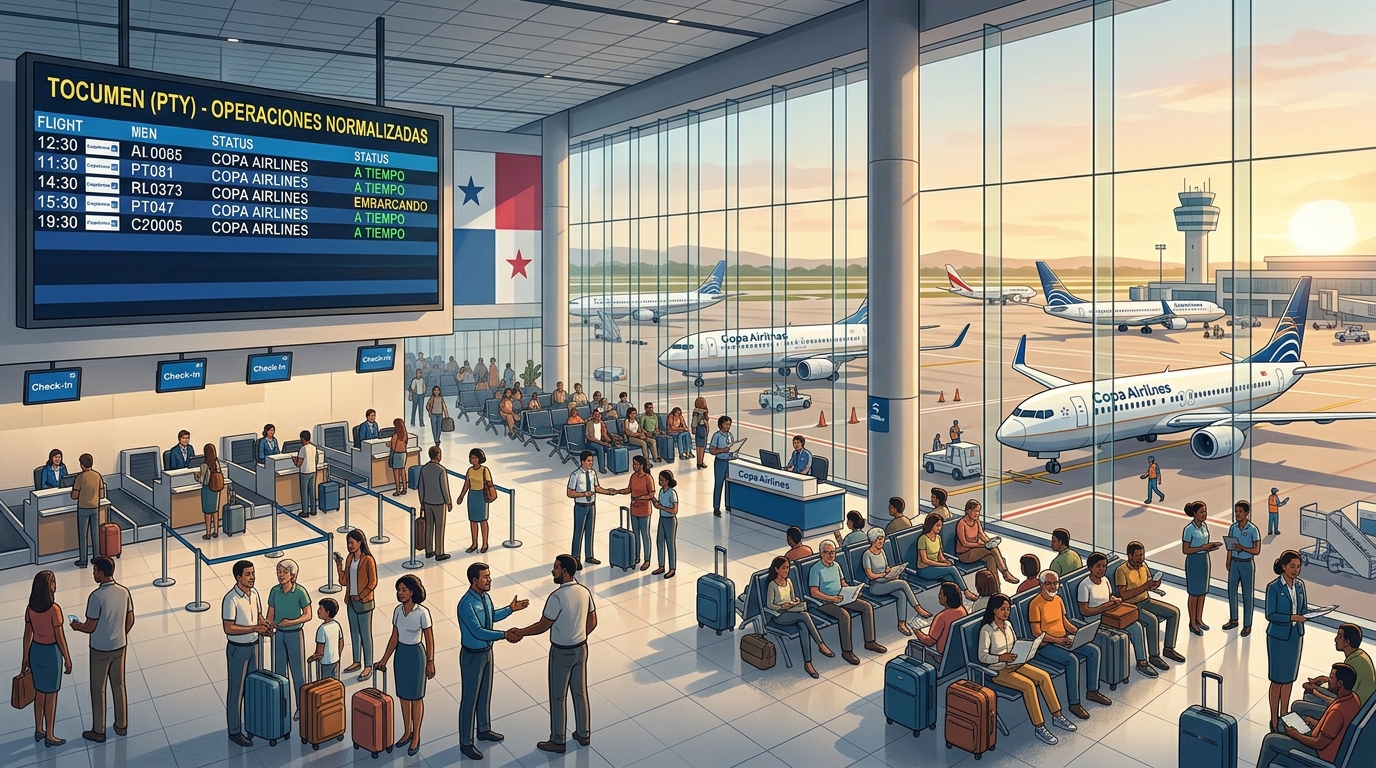
Yesterday the ground moved. It wasn't one of those little tremors you ignore while drinking your coffee. It was an earthquake that shook all of Panama. I was in the yard of a fonda in Chepo, waiting for some patacones, when the floor started to vibrate. The tables jumped. The lady who fries the patacones, Doña Elvira, crossed herself. And I, with my mouth full, only managed to grab the post. From above, when I fly, I've seen how the earth opens like a scar after a tremor. But on the ground it feels different. You feel it in your feet, in your stomach, in the silence that follows. Tocumen International Airport, the heart that connects Panama with the world, closed its runways. Flights were canceled. Passengers were stranded. And I, who always carry my backpack on my shoulder, kept thinking about all those people who suddenly couldn't go anywhere. Today, after hours of uncertainty, Tocumen resumed its air operations. And like a good eagle that flies over this country, I went there to see with my own eyes how things were. I'm not one to stay in the hammock when there's something to tell. So I grabbed my field notebook, got in the truck, and headed to the airport.
The day the earth moved
I'm not going to exaggerate. It wasn't the end of the world. But it was strong. In the city, buildings swayed like palm trees in a breeze. People took to the streets. Cell phones wouldn't stop ringing. Tsunami alerts sounded along the coasts. And at Tocumen, air traffic controllers had to suspend everything. Planes already in the air were diverted to other airports. Those on the ground didn't take off. A taxi driver told me, while taking me to the airport, that his cousin was on the Miami flight that was supposed to land at 10 a.m. and ended up in San José. "She got a scare, poor thing," he said. "But hey, better that than something worse." I nodded. In Panama, we already know that nature rules. And Tocumen, with all its concrete and glass, also bends.
Tocumen: the lung that connects Panama
For those who aren't from here, Tocumen isn't just an airport. It's the gateway to the country. Millions of passengers pass through it every year. It's the hub for Copa Airlines, which flies to a bunch of cities in the Americas. If Tocumen stops, Panama loses its main connector. That's why, when the earthquake forced the runways to close, it wasn't just a matter of canceled flights. It was a blow to commerce, to tourism, to the people who live off the airport. Nearby hotels filled with stranded passengers. Terminal restaurants, some with windows broken by the tremor, served as best they could. Airport employees, many with their own homes affected, still showed up to work. That's what you don't see on the news. People who, despite the scare, keep pushing forward.
What I saw when I arrived at the terminal
I got to Tocumen around 2 p.m. The sun was beating down. The parking lot asphalt was cracked in a couple of spots. Inside, the air conditioning couldn't keep up with so many people. There were long lines at the airline counters. Passengers with tired faces, some sleeping on the floor with their suitcases as pillows. A woman in her 60s, with a Venezuelan accent, told me she'd been waiting 18 hours. "I was supposed to fly to Caracas yesterday," she said. "But here I am, with my little bag and my patience." I offered her some water. She said no, she'd already had some. What she wanted was for her flight to leave already. Panamanians, on the other hand, take it more calmly. A group of kids played cards in a corner. A family shared a bag of hojaldres. Airport staff handed out cookies and juice. It wasn't the chaos you'd expect. It was more of a collective resignation. Like when it rains in the countryside and you have to wait for it to clear.
The reactivation: flights flying again
Around 4 p.m., they announced that operations were resuming. Applause was heard in the terminal. It wasn't an euphoric applause, but one of those that comes from the soul. The first planes to take off were cargo planes, to bring supplies to the affected areas. Then commercial flights followed. I watched a Copa plane taxi down the runway. People in the waiting room pressed against the windows. A little girl pointed with her finger. "Look, Mommy, it's leaving." The mother smiled. I smiled too. Not because I like planes, but because seeing that machine take off meant something was returning to normal. Terminal employees, with their reflective vests, ran from one side to the other. Pilots, with their bags, walked toward the boarding gates. Everyone wanted to leave. And I, from my corner, took notes. Because this is also Panama. The ability to get up after the tremor.
What I learned from the earthquake (and from Tocumen)
I'm not a geologist or an engineer. But I learned something. First, that Panama is in a seismic zone and you have to be prepared. Second, that Tocumen, despite the scare, responded well. The protocols worked. There were no accidents. Third, that people are what matters. The stranded passengers, the employees, the taxi drivers, the coffee vendors. Everyone did their part. If anything is clear to me, it's that this country doesn't back down. And that the airport, even though it's a place of transit, is also a place of encounter. There families say goodbye, hugs are received, deals are closed. That's why, when Tocumen resumed its operations, it wasn't just technical news. It was a sign that we're still here, standing firm.
If you have a flight after an earthquake
It's not something you plan, but it happens. So here are some tips from someone who just went through it:
- Bring water and food: At the terminal, hours can pass without you being able to buy anything. Some cookies and a bottle of water don't weigh much.
- Charge your phone: Outlets fill up with people. If you have a power bank, even better.
- Ask at the counters: Sometimes the information on the screens isn't updated. Talk to airline staff.
- Don't lose your cool: Stress doesn't help. If you have to wait, find a corner, get comfortable, and breathe.
- Have a plan B: If your flight is canceled, find out if you can change it or if there are nearby hotels. The terminal has rest areas, but they fill up fast.
- Be kind to the staff: They're also doing their job under pressure. A smile costs nothing.
What I'd do differently next time
Next time I travel, I'll check the weather and seismic reports before leaving. Not to cancel, but to be prepared. I'll also bring a lighter backpack. And a hammock, in case I have to sleep at the airport. No, just kidding, I won't sleep at the airport. But I will bring a travel pillow. And a book. Because waiting with nothing to do is the worst. Another thing: I'll arrive with more time. Not because of the earthquake, but because Tocumen is always crowded. And after an event like this, even more so. So if you have a flight soon, leave with time. You don't know if the earth will shake again. And if it does, you already know Tocumen reactivates. Like all of Panama.
Next time I fly, I'll look out the window and think about this. About the people who waited, those who worked, those who flew. And about the scar of the river that you see from above, the one the earthquake may have made deeper. But here we are. With our patacones, our heat, and our desire to keep flying. See you on the next layover.
