
AJP Tour Panama: 200 Athletes on the Mat
 written by one who's been there
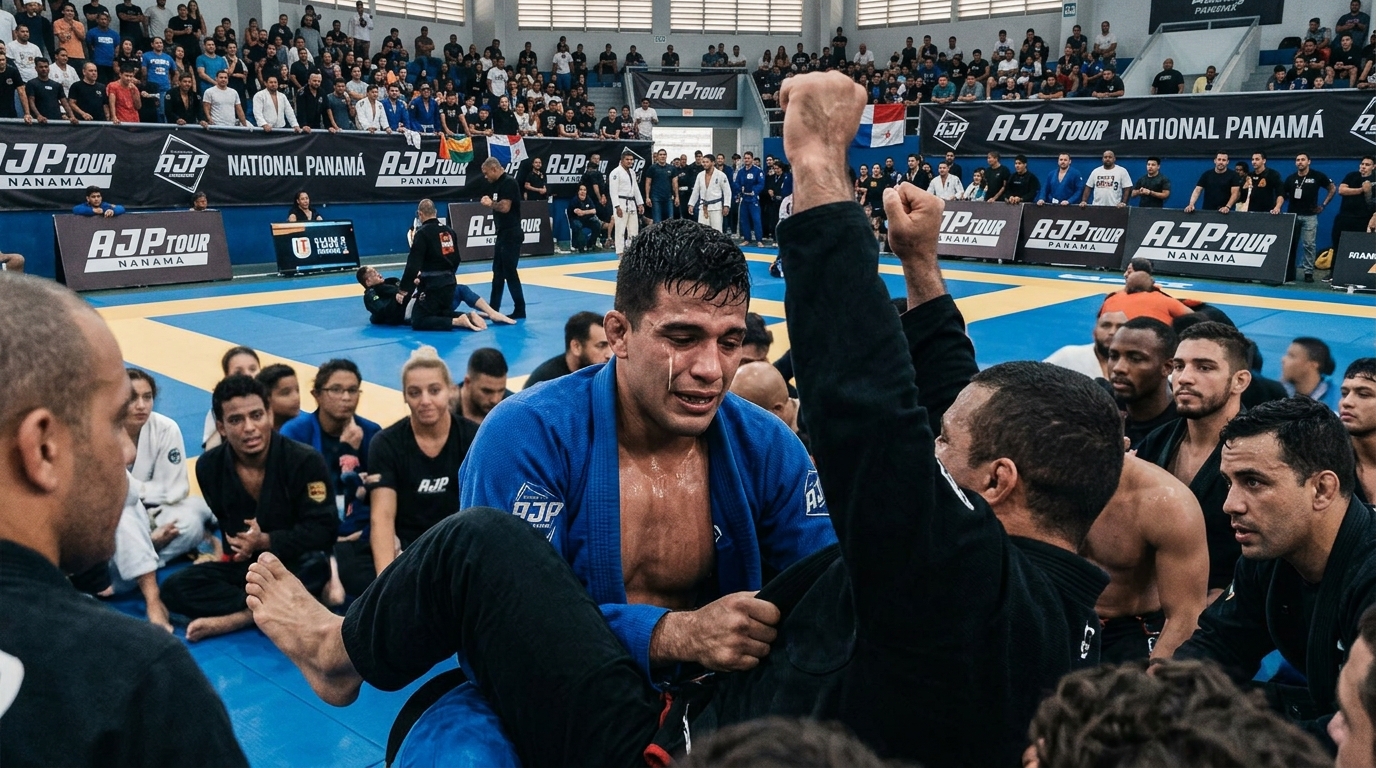
The heat in the gym is thick, sticky. A buzzer sounds. Two bodies collide on the mat. One falls. The other looks for control. That's how the AJP Tour National Panama begins, a tournament that brought together more than 200 international athletes. I was there, not as a competitor, but as that guy watching from the sidelines, with a sweaty notebook and a water bottle that's already warm. From above, flying over the city, the green mat of the gym looks like a patch in the middle of concrete. But down here, the smell of antibacterial spray, rubber, and effort hits you. This isn't a showcase sport. It's mud, it's sweat, it's people who come from far away to measure themselves.
The roar of the mat
There is no silence. There never is. The sound of bare feet, short breaths, coaches shouting. Competitors come from Panama, Colombia, Costa Rica, Mexico, Brazil. Some paid for their ticket months in advance. Others sleep at relatives' houses. Passion is non-negotiable. I saw a 19-year-old kid, blue belt, who lost on points and sat in the stands to cry. His coach, a guy with a worn cap, put a hand on his shoulder and whispered something. I don't know what. But the kid came back the next day to watch the finals. That's the AJP Tour National Panama: a community that hits each other on the mat and hugs afterward.
What it really costs to compete
Let's talk money. Because the sport is beautiful, but registration isn't free. Entry to the tournament for competitors runs about $50 to $80, depending on the category. The uniform (gi) can cost from $60 to $200 if it's a brand name. And if you come from abroad, add flights, lodging, and food. A Colombian delegation told me they spent about $800 per person between travel and stay. It's not for the rich, but it's not for improvisers either. Most cover it with raffles and local sponsorships. Panama as a host has advantages: the dollar, air connections, proximity to South America. But the heat is treacherous. Those not used to it lose fluids fast. I saw a Mexican cramping in the semifinal. They gave him salts, water, and a cold towel. He continued. He lost. But he continued.
The path nobody marks on Maps
The tournament isn't just the mat. It's what happens around it. The gym corridors become an informal market: selling gi patches, bandages, energy drinks, empanadas. Señora Marta, with her pot of rice with chicken, sells at about $3 a plate and can't keep up. Athletes line up between fights. The smell of food mixes with sweat. There's a volunteer physiotherapist treating sprains in a corner. He doesn't charge. He only asks to be told if someone needs ice. That kind of thing doesn't make the news. But it's the heart of the event. If you come to watch, don't just stay in the stands. Walk. Ask. Listen. The best moments are in the corridors, in the locker room conversations, in the hugs after defeat.
What I brought and what I didn't need
When I travel to cover these events, I always bring the same things. I learned through forgetting.
- Reusable water bottle: plastic ones get hot in minutes. Better a thermal one.
- Small towel: to wipe your face and neck. Air conditioning doesn't always work.
- Salty snacks: sweets drain your energy. A handful of peanuts saves the afternoon.
- Power bank: outlets are scarce and everyone wants to charge their phone.
- Notebook and pencil: phones get wet with sweat. Paper holds up.
- Cash in small bills: for the food stall, the bus, the tip. Nobody has change for a $20.
What I won't bring again: thick jeans. Mistake. The heat kills you. Better fresh shorts and a breathable shirt. I also stopped bringing a big camera. The phone is enough and gets in the way less.
The logistics of getting there and staying
The gym where the AJP Tour National Panama was held is in the city, but I won't give you the exact address because it changes with each edition. Check the tournament's social media. What I do know: getting there by metro is possible, but from the station you walk about 15 minutes under the sun. An Uber from downtown costs about $5-8. If you come from abroad, look for lodging in areas like Vía España or El Cangrejo. There are hostels from $15 a night, but book in advance because teams snap up spots. Food near the gym is varied: from $4 food stalls to fast food chains. I ate at a patacones stand outside. The lady fried them on the spot. $2.50. Worth every cent.
What I'd do differently the second time
The first time I covered a tournament like this, I arrived late. I missed the first brackets. Now I get up early. The fight schedule starts at 8 a.m., but the best matches are usually in the afternoon. If you want to see the heavyweights, hold out until 4 or 5. Bring your own folding chair if you're staying all day. The stands are hard. And don't trust the wifi. There isn't any. Or it's terrible. Download what you need beforehand. Another thing: talk to the coaches. They tell you stories the athletes won't. I found out about a competitor who sold his bicycle to pay for the trip. That doesn't make any press release.
The after: where they celebrate and cry
After the tournament, the teams go eat. There's no champagne award ceremony. There's cold beer at a nearby bar, or a plate of rice with chicken at Doña Marta's stall. I saw a group of Brazilians singing on the corner. I saw a Panamanian woman hugging her gold medal, crying. The AJP Tour National Panama doesn't end when the last buzzer sounds. It ends when the last athlete goes to sleep, with bruises and a smile. Or without a smile. But with the certainty that they'll be back.
If you're going next time, bring comfortable clothes, cash, and patience. The sport is fast, but the logistics are slow. And don't forget your cap. The sun doesn't forgive. See you at the next tournament. I'll be on the sidelines, with my notebook and my thermal bottle.
