
Panamanian food: the flavor route
 written by one who's been there
The breakfast that marked me forever
The first time I tried a typical Panamanian breakfast was in a town called El Valle, in a fonda with no name. Mrs. Carmen, a grandmother with a flowered apron, put a steaming plate in front of me: corn tortillas fresh from the griddle, scrambled eggs with onion and tomato, beef stew, and a glass of freshly squeezed orange juice. All for $3.50. I almost fell off my chair.
From above, Panama looks like a green tapestry with strips of rivers. But on the ground, the country smells like toasted corn, strong coffee, fresh seafood. Panamanian cuisine is like that: it doesn't brag, but it grabs you. It's like a hug from your grandma, only with more chili.
Sancocho that cures everything
If there's one dish that defines Panama, it's sancocho. A chicken soup with ñame, yucca, corn on the cob, and cilantro, served with white rice and a squeeze of lime. Every family has its recipe, and everyone swears theirs is the best. I was in a house in Los Santos, where Mrs. Yolanda told me the secret is the free-range chicken, not the farm-raised one. "That one is pure bone, but the flavor...", she said, and she was right.
Sancocho is taken for colds, for hangovers, for heartache. It's Panama's liquid hug. I tried it one day of torrential rain, with mud up to my ankles, and it tasted like heaven. It's not elegant, it's not Instagram-worthy, but it's real.
Patacones: the sound of happiness
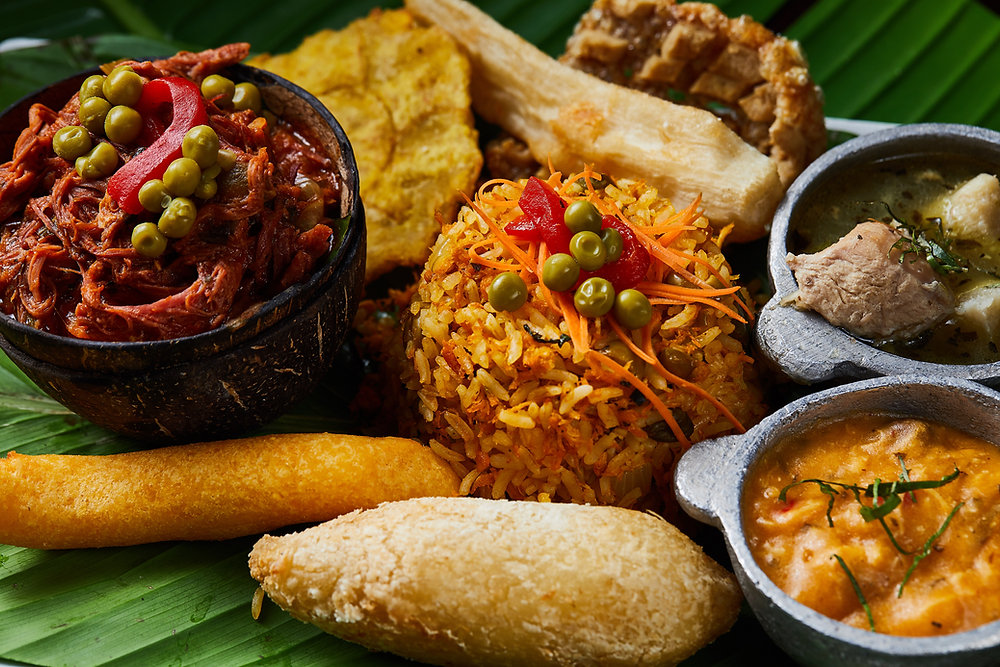
In every corner of Panama, from fondas to fancy restaurants, there's a sound that repeats: the smashing of green plantain. Patacones are the base of everything. They're fried, smashed, fried again, and they come out crispy on the outside, soft on the inside. They're served with everything: with meat, with seafood, with cheese, or alone with a pinch of salt.
Once, at a beach stand in Santa Catalina, I saw a woman making patacones to order. It was 8 in the morning and she already had a line of surfers waiting. She served them with corvina ceviche and a bit of hot sauce. "That takes the chill off the sea," she told me, and she wasn't wrong. Patacones are Panama's bread, the faithful sidekick, the friend that never fails.
Ceviche: freshness with attitude
Panamanian ceviche is made with corvina, lime, onion, cilantro, and a touch of hot pepper. It's served cold, in a glass or on a plate, and eaten with patacones or soda crackers. It's acidic, fresh, and wakes up your senses. In Panama, ceviche is a social ritual: it's shared, discussed, celebrated.
I had the best ceviche of my life at a dock in Pedasí, at a cart that sold drinks and seafood. Mr. Ricardo, a retired fisherman, prepared it right there, with fish he had caught that morning. "The secret is fresh lime, not bottled," he told me. And I believed him. That ceviche made me forget the sticky heat, the smell of diesel, and the boat sickness.
The fonda route: eating where the people eat
To understand Panamanian cuisine, you have to sit in a fonda. They're home-style restaurants, sometimes with no sign, where they cook with love and charge little. There I tried arroz con pollo, guacho de mariscos, grilled meat with yucca, and the famous "arroz con guandú" from the Azuero region.
In a fonda in Penonomé, Mrs. Marta served me a plate of rice with pigeon peas, pork, and cabbage salad. "That's real food," she told me. And she was right. There was nothing sophisticated, but every bite tasted like home. The fonda was a room with plastic tables, a slow-spinning fan, and a dog sleeping in the corner. Perfect.
Sweets: the sweet ending of every meal
Panama also knows how to sweeten. Dulce de leche, cocadas, rice with coconut, yucca torrejas, coconut sigh. Each province has its specialty. In Bocas del Toro, I tried a rice with coconut that made me close my eyes. In Chiriquí, a pineapple and cheese sweet that surprised me with its strangeness and deliciousness.
Cocadas are sold on beaches, at bus stops, in markets. They're balls of grated coconut with condensed milk, sometimes with a touch of cinnamon. They don't last long: they melt in the heat. You have to eat them fast, like everything in Panama.
How much does it cost to eat in Panama?
A meal in a fonda costs between $3 and $7. A plate of ceviche at a beach stand, about $5. A sancocho at a restaurant, $8. In a fancy restaurant in the city, $15 or more. But the best is street food: beef empanadas, carimañolas, hojaldres with cheese. All at prices that don't hurt.
Don't overspend: look for fondas, stalls, markets. Street food is the most authentic and the cheapest. And if you don't know what to order, ask. Panamanians are friendly and will recommend their favorite.
What I brought in my backpack
- Bug repellent: in fondas, sometimes there are mosquitoes. It's nobody's fault, it's the jungle.
- Wet wipes: the heat makes food feel heavier, and your hands get sticky.
- Water: the spice and salt demand hydration.
- Cash: many fondas don't accept cards. Carry small bills.
- Open stomach: don't be afraid of the unknown. Try everything.
Mistakes not to repeat
- Eating at a fast-food chain: no, no, no. You're in Panama, there's better.
- Ordering "no spice": the spice is mild, not like Mexico. Go for it.
- Not asking for the daily special: fondas have specials not on the menu.
- Arriving late: sancocho runs out, ceviche runs out, everything runs out. Arrive early.
Next time
Next time I go to Panama, I'll bring a notebook to write down the recipes. I want to learn to make Mrs. Yolanda's sancocho and Mr. Ricardo's ceviche. I also want to try tamal de olla, which they told me is a delight I can't miss. And I want to go back to that nameless fonda in El Valle, to see if Mrs. Carmen recognizes me.
Panamanian cuisine is not just food: it's a way to understand the country. Every dish has a story, every flavor has a place. And I, from my eagle's perch, come down to eat with the people. Because the sky is pretty, but sancocho is on the ground.
