
Panama Jazz Festival 2027: A Flyover Guide
 written by one who's been there
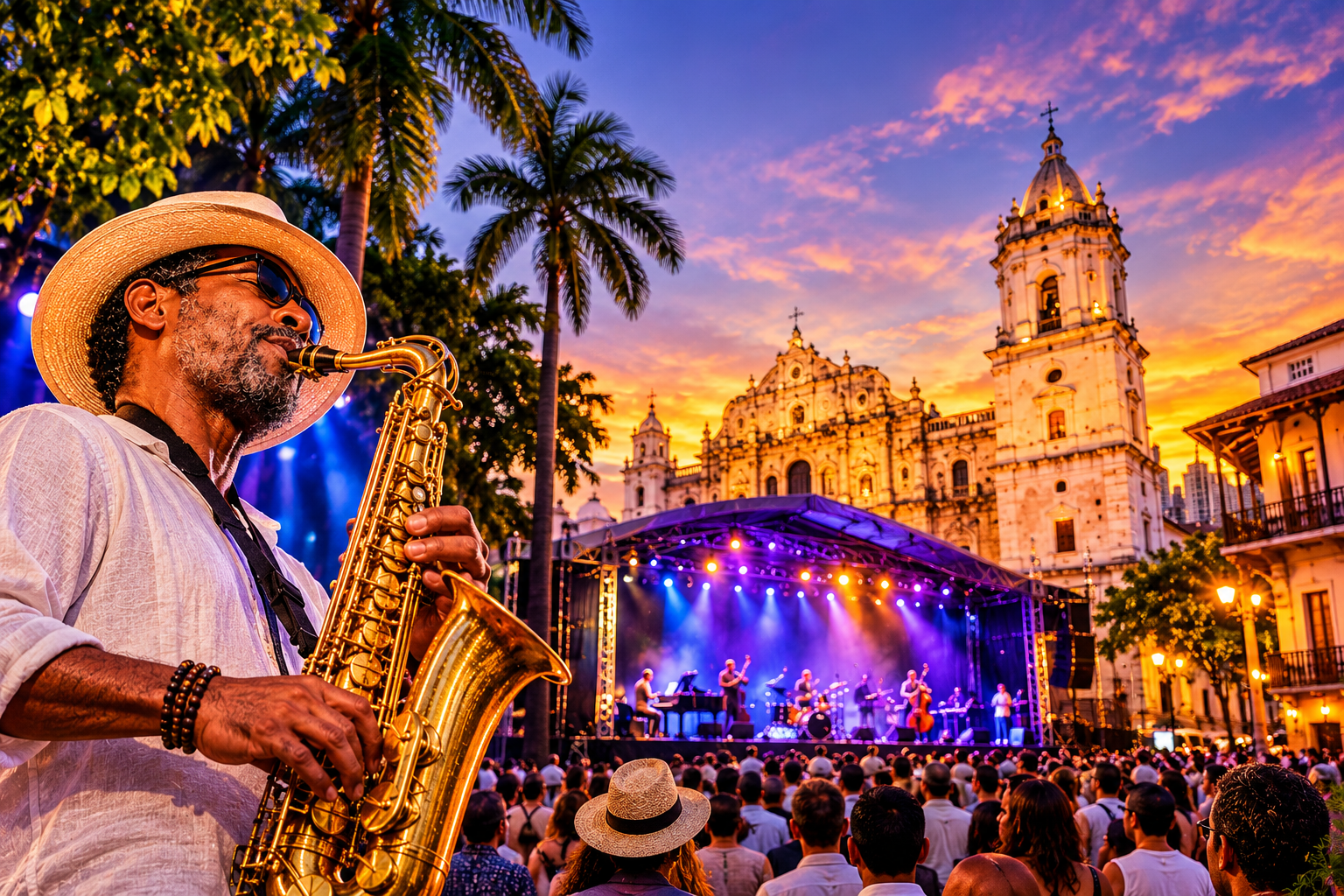
The Panama Jazz Festival 2027 is already marked on my calendar. I'm not a festival person, but this one is different. I watched it grow from above: first a couple of tents in Plaza Catedral, now it's a whole week of music that spreads through the city like a tide. And I, who fly over Panama all year, come down to tell you what I've seen and what I'd do differently.
The festival that started in a theater with leaks
The first time I went, a few years ago, the main stage was a theater with leaks. Literally. It was raining outside and dripping inside onto the piano. Nobody moved. The pianist kept playing and the audience opened umbrellas. That's the Panama Jazz Festival: music matters more than discomfort.
For 2027 they expect over 200 artists, workshops at universities, free concerts in parks, and a nightlife scene that takes over Casco Viejo. I haven't confirmed the full lineup yet—names are trickling out—but the organization usually announces the complete lineup late in the year. Ask Danilo Pérez, he's the one who knows. Or check the official website, which updates when they feel like it.
Where you really get in (and where you don't)
The heart of the festival beats at the Teatro Nacional, Plaza Catedral, and the Ateneo. But it doesn't end there. There are jam sessions in bars that don't even appear in the official program. Those are the good ones. Ask at the bar, follow the musicians when they leave with their instrument cases on their shoulders. That's where the real jazz is, the unannounced kind.
What I don't recommend: staying only in the official circuit. It's like seeing Panama from the air and never getting off. You miss the mud.
What the Panama Jazz Festival 2027 really costs
I'll be direct: the festival has options for every budget, but the city can empty your wallet if you're not careful. Here's what I estimate for a week:
- Tickets: free concerts in parks cost nothing. Teatro Nacional shows run about $30-60 per night. The full pass, if you buy early, is around $150-200.
- Lodging: a hostel in Casco Viejo, $20-30 per night in a dorm. A boutique hotel, $120 and up. I've slept in a hammock at a friend's house in Chorrera and saved on the hotel, but transportation ate the difference.
- Food: at the fondas in Mercado de Mariscos you eat for $6-8. At trendy restaurants, $25 per plate and not always worth it.
- Transportation: Uber from Casco to the University of Panama, about $5-7. Public buses are cheaper but give you the full city tour, whether you want it or not.
Real budget: with $400-500 you can do the week if you stay in a hostel and eat at fondas. With $1000, you sleep in a hotel and go to all the paid concerts. More than that is luxury.
The heat hits and so does the rain
This isn't a summer festival up north. It's Panama in January, which is dry season, but don't get cocky. The midday sun melts you. The workshops at the University of Panama are in classrooms without air conditioning, or with an AC that can't keep up. Bring a water bottle, a fan, and light clothing. And a folding umbrella, because suddenly a downpour soaks you to the bone in five minutes.
The first time I got caught in a squall in Plaza Catedral and ended up watching the concert soaked, with water running down my back. No regrets, but the second time I brought a rain jacket.
What I'd do differently the second time
The first time I tried to do everything. Mistake. The festival has so many activities that if you don't choose, you end up running from one place to another without listening to a full song. Now I pick two or three events per day and leave room for the unexpected. Because there's always a jam session on a terrace that you hear about via WhatsApp.
I'd also book lodging months in advance. Casco Viejo fills up and prices rise like foam. The first time I got a room by miracle in a noisy hostel where the AC sounded like a boat engine. This time, I'm booking in January of the previous year.
The workshops: the part that doesn't make the photos
The workshops at the Panama Jazz Festival 2027 are the soul of the event. There are classes in improvisation, rhythm, and the history of jazz in Panama. Not everything is for advanced musicians; there are open talks and clinics for beginners. I sat in on a percussion one and came out with swollen hands and a grin from ear to ear. The teacher, a man from Colón who played the drum like he owed him money, made us repeat a rhythm until it came out of our pores.
You don't see that in the concerts. It's the behind-the-scenes, the sweat, the mistake, the laughter. If you go, don't miss it.
Where to eat between concerts
Casco Viejo is full of tourist traps. But there are honest places. Doña Nidia's fonda, on the corner of Plaza Herrera, sells patacones with fried fish for $5. No sign, just a window and a smell that pulls you in. I've eaten there three times in one week and no regrets.
For coffee, there's a spot on Calle 9 that roasts Panamanian beans and doesn't charge $7 for a latte. It's called Café Unido, but it's not a chain, it's some guys who know what they're doing. And if you want something more formal, the Mercado de Mariscos never fails, though the fish smell sticks to your clothes.
Nightlife: after the last chord
When the Teatro Nacional closes, the night goes on. The bars in Casco Viejo fill with musicians and audience. There are jam sessions at Bar Relic, La Rana Dorada, and places that change names every year. Ask, walk, peek in. The music doesn't stop until the last drummer falls asleep on the ride.
Of course, heat and alcohol take their toll. Drink water between beers. And don't trust the sea breeze, it's deceptive.
Transportation: how to get around without dying trying
The festival has venues in different spots: Teatro Nacional, University of Panama, Ateneo, parks. They're not all close. Uber works well, but at peak hours prices spike. Public buses are an adventure, but they get you there. Metro Line 1 drops you near the University of Panama, and from there you walk or take a taxi.
My advice: group activities by zone. One day do everything in Casco Viejo, another day at the University. That way you don't waste time in traffic. And walk. Casco Viejo is best on foot, even if the cobblestones kill your feet in inadequate sandals.
What to pack (and what to leave at home)
- Light, breathable clothing: two changes per day if you're doing workshops and concerts.
- Comfortable shoes: the streets of Casco Viejo are a puzzle. No heels.
- Reusable water bottle: there are refill stations at some points, but not all.
- Sunscreen: the January sun is strong even when it's cloudy.
- Cash: many fondas and bars don't take cards. ATMs in Casco Viejo sometimes run out of bills.
- A notebook or phone for notes: because you'll want to remember musicians' names and songs.
What not to bring: expensive jewelry, large backpacks at concerts (not all venues have coat checks), and expectations of punctuality. Here concerts start when they start.
The free concerts: the festival's gift
Every year, the Panama Jazz Festival offers free concerts in parks and plazas. They're crowded, with families, kids running around, shaved ice vendors, and balloons. The music is good, sometimes better than the paid concerts, because the musicians are relaxed and so is the audience. Bring a folding chair or a blanket to sit on the grass. And arrive early, because it fills up.
Last year I saw a jazz fusion band with tamborito influences that blew my mind. I don't remember the name, but they were in Plaza Catedral on a Tuesday afternoon. That kind of thing happens at the festival and isn't in the official program. That's why you have to be there.
The festival hangover: what to do afterward
The Panama Jazz Festival 2027 ends on a Sunday, but the city goes on. Take the chance to see Panama beyond Casco. Go to the Mercado de Mariscos on a Monday morning, when the boats come in. Climb Cerro Ancón and look at the city from above (yes, like me, but without feathers). Or take a bus to Portobelo and eat at Doña Elvira's fonda, where the fried fish reconciles you with life.
The festival is the excuse. Panama is the prize.
See you in January 2027. I'll be around, with my field notebook and my fan. If you see me, say hi. And if you have a free hammock, let me know.
