
Panama Gives Free Travel Insurance to Tourists
 written by one who's been there
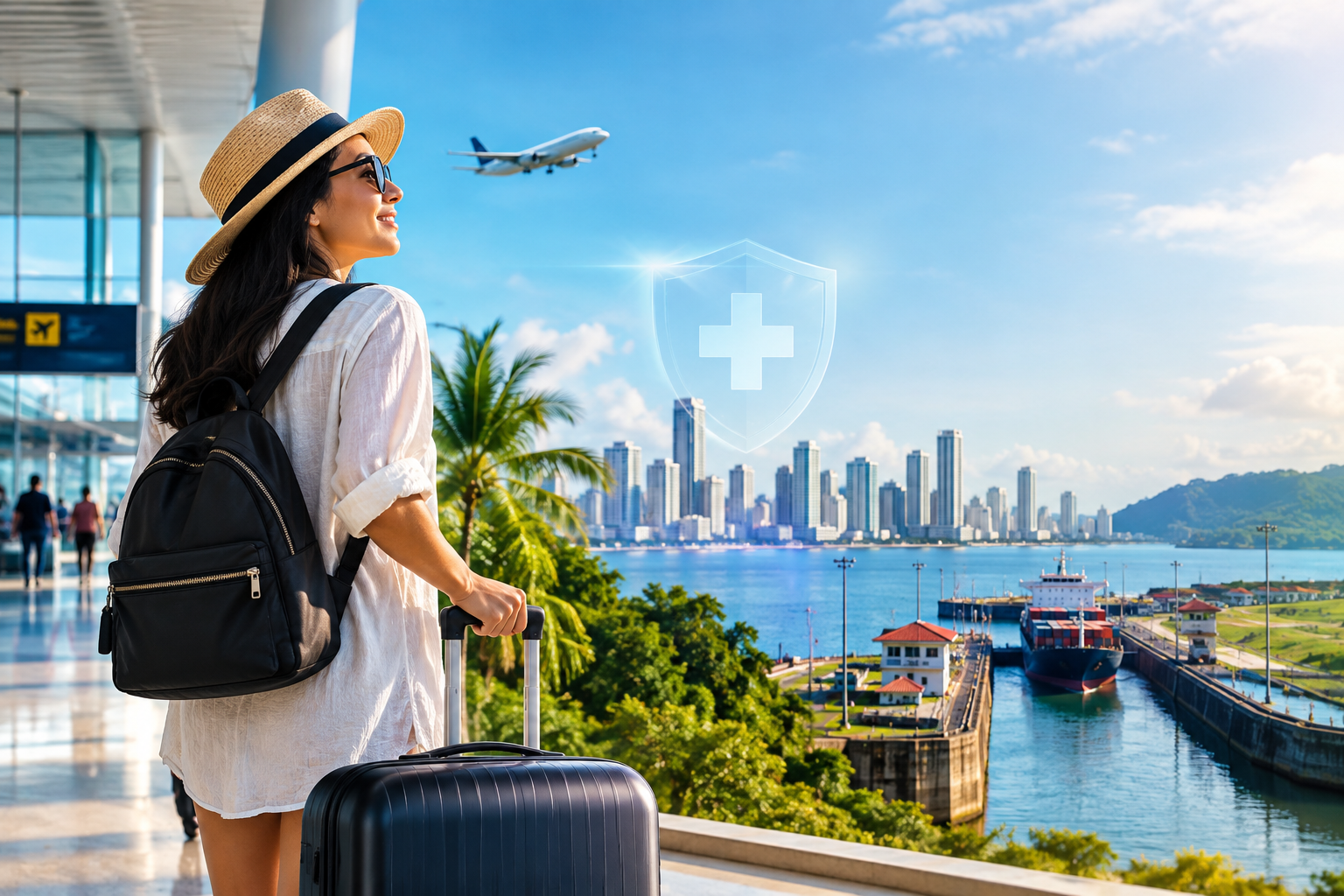
I landed at Tocumen on a Tuesday in September with my backpack digging into my shoulder and a thirst that only a cold bottle of water could fix. The heat hits you like a wet slap. And while I waited for my luggage, I heard a guy with a Colombian accent tell his girlfriend: "Relax, travel insurance here is free." My ears perked up. Free? Since when? Turns out the Panamanian government launched on September 11, 2026, a free and automatic travel insurance for foreign tourists. No paperwork, no forms, no fine print. You arrive, pass immigration, and you're covered. Just like that. And I, who have flown over this country for years, got off the plane with a cat-like grin because this changes the game for backpackers.
What the free travel insurance covers (and what it doesn't)
It's not a blank check. It's basic traveler assistance insurance. It covers medical emergencies up to a certain amount, evacuation, repatriation, and some trip cancellation or lost luggage expenses. It doesn't cover pre-existing conditions, extreme sports, or drunken nights that end in the ER. I'm clarifying that right away because I've seen more than one confused soul in the waiting room of Santo Tomás Hospital. The policy is automatic for foreigners entering as tourists. It doesn't apply to residents or people who live here. If you're Panamanian, you keep your regular insurance. The exact coverage amount I didn't confirm, but the Panama Tourism Authority website should have the details. Ask before you rely on it. I did, and they told me coverage is "reasonable for an emergency." Exact words from an official who wouldn't give numbers. Classic.
The trail nobody marks on Maps: how to get into the jungle without scares
One thing is having insurance, another is venturing into the Darién jungle without a guide. Insurance won't pull you out of a swamp if you have no signal. So if you're hiking trails like Cerro Chucantí or the route to Bajo Mono waterfall, tell someone. Carry water, food, and a whistle. Insurance covers evacuation, but evacuation can take hours. And in the jungle, hours are hours. Last time I climbed Chucantí, mud reached my knees and sweat ran down my back like a river. From above, you can see the scar of the Tuira River cutting through the mountain. But down in the mud, it's a different story. Wear boots, not sneakers. And bring a change of clothes in a waterproof bag. Insurance won't dry your feet.
What a trip to Panama really costs (with free insurance)
Let's talk money. The free travel insurance saves you between $30 and $80 that you'd normally pay for a basic policy. That's a night in a hostel or several lunches at a fonda. But the rest of the costs are still there. A round-trip flight from Miami or Bogotá can cost between $300 and $600. Internal transport: bus from Albrook to David, about $15. Boat to Coiba, $90 round trip. Lodging: from $10 in a hostel to $150 in a boutique hotel. Food: a plate of patacones with fried fish at a fonda in Portobelo, $5. A cold beer, $2. Free insurance won't pay for your beer, but it'll give you peace of mind if you get dengue. And dengue is in season. Trust me.
What I'd do differently the second time
The first time I came, years ago, I had no insurance. I twisted my ankle on the Quetzales trail and had to pay for a consultation at a private clinic in Boquete. $120. In cash. Now, with this automatic insurance, that wouldn't happen. But still, there are things I'd do differently. For example:
- I'd write down the insurance emergency number on my phone and on paper. Signal isn't always reliable.
- I wouldn't assume coverage includes everything. I'd ask about water sports before jumping into snorkeling in Bocas.
- I'd buy supplemental insurance if I'm doing something riskier. The free one is basic.
- I'd keep receipts for any medical expense. Reimbursement isn't automatic.
- I'd tell my family I have insurance. So they don't worry if I disappear for a few days in the comarca.
Where you get treated if something happens (and how not to die trying)
In Panama City, private hospitals like Punta Pacífica and Nacional treat tourists. In the interior, things are more rustic. In Chitré there's a decent hospital. In David, Hospital Chiriquí. But if something happens in the San Blas archipelago, evacuation might be by boat and then small plane. Insurance covers that, but the logistics are a headache. Last time I was in San Blas, a French tourist cut himself on a starfish and ended up in a clinic in Cartí with stitches. He had no insurance and paid $200. With the new system, that guy would have been covered. I wish more people knew.
Insurance doesn't replace common sense
I've flown over this country and seen it all. Tourists swimming in swollen rivers, eating ceviche on the street and ending up with an infection, renting a car and driving off the road in El Valle de Antón. Free travel insurance is a relief, but it's not an invisibility cloak. If you go to the Guna Yala comarca, respect local rules. If you go to the jungle, go with a guide. If you go to the beach, don't swim far if you don't know how. Panama's sea is beautiful but treacherous. And insurance won't pull you out of a rip current.
How to activate it (or rather, how to do nothing)
The beauty of this insurance is that it's automatic. No lines, no forms, no payment. You just enter the country as a tourist and that's it. But careful: you need a valid passport and a stay under 90 days. If you come by land from Costa Rica, it also applies. If you come on a cruise, ask your cruise line because you might already have coverage. And if you stay more than 90 days, the insurance expires. So if you plan to stay and live the nomad life, better get private insurance. I did after 90 days and it cost me $45 a month. Not much, but not free.
What those who already used it say
You'd have to ask tourists who already went through an emergency with this insurance. I haven't had to use it, thank God. But I talked to an Argentine girl who got sick in Bocas del Toro. They treated her at the Changuinola hospital and she paid nothing. "They asked for my passport and that was it," she told me. Another person, a Spaniard, broke his arm on the Pianista trail. Evacuation was by 4x4 and then ambulance. Insurance covered everything. That gives me confidence. But I also heard of a case where reimbursement took weeks. So it's not perfect. It's Panama.
If you come, come relaxed
Free travel insurance is a gesture that says a lot about this country. Panama wants you to come, walk its trails, swim in its beaches, eat at its fondas. And it wants you to not go broke if something happens. That's real hospitality. Not the brochure kind, but the kind from people who tell you "relax, you're covered here." So pack your boots, repellent, and an attitude of respect. Insurance covers the emergency, but you bring the experience. Next time I fly over the canal, I'll look down and think of all those travelers who now have a safety net. And I'll smile. Because from above you see the scar of the river, but you also see the people who help. See you at the next tide.
